
Ukraine war drags on
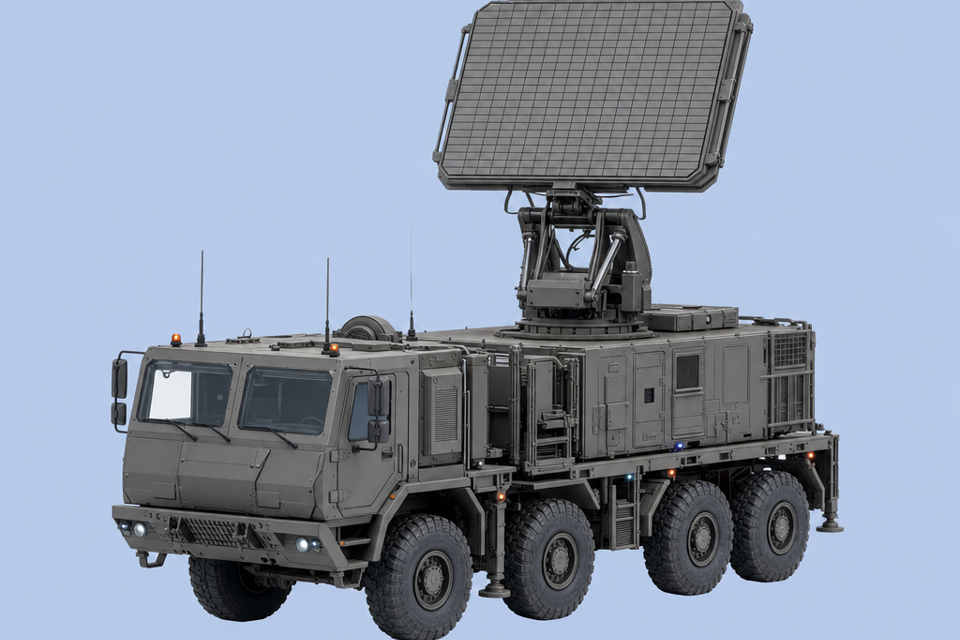
If local ceasefires and the planned November talks fail to produce a settlement, the war in Ukraine continues and so does the trade it created. Europe keeps replacing Russian pipeline gas with imported LNG, much of it from US Gulf Coast terminals. European governments keep ordering artillery shells, missiles and air-defense systems at wartime rates. EU tariffs and remaining sanctions keep Russian fertilizer, steel, aluminum and other metals at a disadvantage in Western markets, leaving that demand to other suppliers. A portfolio under this thesis selects US-listed companies on the receiving end of those flows: LNG exporters and the gas producers and pipelines that feed them; manufacturers of ammunition, air-defense interceptors and radar; and non-Russian producers of fertilizer, nickel, aluminum, palladium and similar commodities Russia used to supply. Companies with remaining Russian operations are excluded.
Cheniere Energy is the largest US LNG exporter; liquefaction at Sabine Pass and Corpus Christi plus LNG marketing is the entire business, so the company is the thesis's leg 1 by construction. independent press puts Q2 2026 shipments at 184 cargoes, 19.4% above the prior year, with 2026 production guidance of 53 to 54 million tonnes and 2026 adjusted EBITDA guidance of 7.9 to 8.4 billion USD; TTM diluted eps of 14.19 USD confirms a real operating business at scale. the discount from 1.0 reflects the brief's own preference: most revenue is long-term fixed-fee take-or-pay, and management reports under 1 million tonnes of unsold 2026 volume and under 50 million USD of EBITDA per 1 USD change in market margin, so a wider Europe-to-Henry-Hub spread moves earnings only at the margin through Cheniere Marketing and new SPA signings for the Sabine Pass and Corpus Christi expansions.
CQP owns and operates the Sabine Pass LNG terminal in Louisiana, over 30 mtpa of liquefaction and export capacity, and has no other business — by business mix it is entirely leg 1 of the thesis. the discount from pure play is structural: the FY2025 10-K states roughly 85% of anticipated production is contracted to third parties under long-term SPAs and IPM agreements through the mid-2030s on fixed plus variable fees, and the uncontracted remainder flows to Cheniere Marketing at the parent, so the merchant upside the brief prefers accrues mostly to LNG rather than CQP. what the war leg does move for CQP is sustained full utilization (variable fees), TTF-indexed IPM volumes, and offtake signing for the up-to-20 mtpa Stage 5 expansion (QatarEnergy SPA, october 2026). a fee-heavy structure the brief says should score below the merchant exporters — 0.7.
CF Industries is a single-product business: nitrogen (ammonia, urea, UAN, AN) sold mainly in North America, $7.08bn of 2025 net sales on 19.1m tons, produced mostly from low-cost US gas plus Canada, a Trinidad JV and a reduced UK site. the whole company sits inside leg 4 of the thesis — a non-Russian nitrogen producer whose margin is the gap between Henry Hub and the European marginal producer's gas cost, and whose home market is shielded from Russian UAN by duties. but direct European sales are small (UK ammonia production was shut in 2023 on gas costs, the Ince plant closed in 2022), so the war feeds earnings through the global nitrogen price rather than through European volumes, and the brief itself flags that the commodity cycle — in 2026 the Iran and Hormuz shock — can swamp the Ukraine effect. material exposure, not a pure play on the sanctions-and-tariff mechanism: 0.65.
Nutrien is the largest potash producer (six Saskatchewan mines, Canpotex export arm) and a large North American nitrogen producer, plus the biggest ag retailer in North America and Australia. no Russian or Belarusian assets. fy2025 adjusted EBITDA: potash 2,254 · nitrogen 2,147 · phosphate 382 · retail 1,736 (total 6,046) — potash and nitrogen are roughly 73% of earnings but retail is about 65% of sales and is a fertilizer buyer, not a seller. the leg 4 channel is price, not direct European volume: third-party sales to Europe were only $386m of $26.9bn, and Canpotex ships mostly to Latin America and Asia. EU tariffs on Russian and Belarusian potash and nitrogen plus the North American gas-cost edge over TTF-priced European plants lift global potash and urea realizations, which flow through the upstream segments. material exposure diluted by retail and indirect European linkage → 0.6.
NextDecade is a single-asset US LNG liquefaction developer: its whole business is the Rio Grande LNG export facility near Brownsville, Texas — five trains (~30 mtpa) under construction, Train 6–8 in permitting, plus a small carbon-capture side effort. no other segment. the thesis angle (US LNG exporters and liquefaction developers) is literally what the company does, and it carries the merchant exposure the brief prefers: ~1,100 TBtu of uncontracted ramp-up volume from Train 1 startup through 2031, 175 TBtu already sold forward at >$3/MMBtu margins, with management guiding >$6/MMBtu implied margins on the rest. European majors (TotalEnergies 5.4 mtpa, Shell, Engie, Galp, Equinor) anchor the long-term SPAs. held slightly below 1.0 because the company is pre-revenue until first LNG in Q2 2027, NEXT's economic interest in Phase 1 is a minority (~21% until investor return hurdles), and ~77% of five-train capacity sits under 20-year fixed-fee SPAs that earn the same either way.
Alcoa is a vertically integrated primary aluminum producer (bauxite, alumina, smelting; SIC 3334) with no Russian operations — it ceased buying from and selling to Russian businesses in 2022. the aluminum segment is the larger business (fy2025 third-party sales about $8.4b at $3,376/t realized vs roughly $3.7b alumina), and about 28% of smelting nameplate (874 of 3,102 kmt) sits in Iceland, Norway and Spain, with Canadian metal also sold into Western markets, so the company sells directly into the European and US premiums that excluded Russian supply supports. but earnings are set by the global LME and alumina cycle, the alumina segment sells worldwide, and Spanish assets pay TTF-linked gas and European power, so the sanctions channel is a material slice rather than the whole story. material exposure, 0.6, consistent with the brief's lower-purity treatment of leg 4.
Century Aluminum is a single-product primary aluminum smelter (SIC 3334) with ~770k tpy capacity across Sebree and Mt. Holly in the US and Grundartangi in Iceland, plus the Jamalco alumina refinery and a Dutch anode plant that feed the smelters. no Russian assets or revenue. pricing is LME plus regional premium — Midwest premium on US metal, European duty paid premium on Icelandic metal — which is exactly the channel leg 4 names for sanctioned-metal substitution; Grundartangi (~320k tpy, roughly 40% of capacity) sells into the European market that excludes Russian metal. by business mix this is a pure non-Russian primary aluminum producer, so it sits near the top of the sleeve. held below 1.0 because the brief sizes leg 4 lower: LME price, Section 232 tariffs and the 2026 Hormuz supply shock, not the Ukraine mechanism, have driven most of CENX's recent earnings swing, and the war-specific premium is a minority of realized price.